


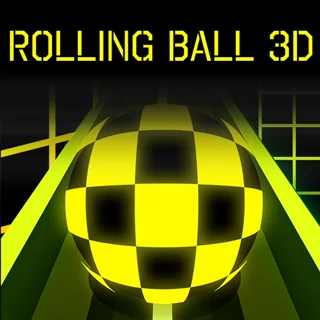
Rolling Ball 3D Unblocked


Candy Jump

CirCloO 2
CirCloO Unblocked
Color Road Unblocked
Color Tunnel 2

Color Tunnel Unblocked

Car Drift Racers 2

Crazy Tunnel 3D Unblocked
Cubefield

Doodle Jump

Eagle Ride

Electron Dash

Endless Tunnel Unblocked
OvO

Red Ball 4
Rolling Ball 3D

Rolly Vortex
Run 2
Run 3

Running Fred

Skiing Fred

Slope 3

Slope Ball
Slope City
Slope Racing 3D

Slope Run
Slope Tunnel

Slope

Snow Rider 3D

SWSF Bali
SWSF Havana
SWSF HongKong
SWSF Mumbai
SWSF New Orleans
SWSF NYC
SWSF Singapore
SWSF Tokyo
SWSF Venice
SWSF Winter Holiday
Super Falling Fred

Super Slope Game

Tunnel Rush
Tunnel Rush 2
Two Ball 3D Dark
Two Ball 3D
Two Tunnel 3D

Vex 3
Vex 4
Vex 5
Vex 6
Vex 7
Rolling Ball 3D Unblocked | Running Games | Skill Games
About Rolling Ball 3D Unblocked | Running Games | Skill Games
We are thrilled to present an in-depth exploration of Rolling Ball 3D, a captivating and intensely engaging experience that has swiftly captured the attention of players seeking thrilling running games and precision-based skill games. Inspired by the foundational mechanics of highly successful titles in the endless runner genre, Rolling Ball 3D elevates the core concept with its unique visual presentation and demanding, yet rewarding, gameplay. In this meticulously crafted game, players are tasked with the crucial responsibility of guiding a sphere along a progressively challenging, ever-descending course. This journey is not merely about forward momentum; it is a constant test of reflexes, timing, and strategic decision-making as the very terrain beneath the ball shifts and tilts. The inherent simplicity of the premise—control the ball as it hurtles down a series of platforms—belies the profound depth of challenge and the sheer addictive quality that makes Rolling Ball 3D a standout title. We delve into the intricate design, the core gameplay loops, and the multifaceted appeal that positions this game as a must-play for enthusiasts of arcade-style challenges and high-score chasing.
The Core Gameplay: Precision and Momentum
At its heart, Rolling Ball 3D is an exercise in calculated risk and masterful control. Players are introduced to a dynamic environment where a solitary ball is propelled forward with an inherent momentum. The primary objective is to maintain this momentum while navigating a treacherous path constructed from a succession of sloping and tilting platforms. The controls are deceptively straightforward, typically involving simple directional inputs to steer the ball. However, the true mastery lies in understanding how these inputs interact with the physics of the game. Each subtle nudge, each slight adjustment, has a significant impact on the ball's trajectory and its stability. The platforms themselves are not static; they frequently tilt, rotate, or even disappear, demanding constant vigilance and the ability to anticipate changes in the environment. This dynamic nature ensures that no two playthroughs are ever exactly the same, fostering a sense of emergent challenge that keeps players on the edge of their seats. We find that the most successful players are those who develop an almost intuitive understanding of the ball's weight and inertia, learning to make minute adjustments rather than drastic corrections. The constant forward motion creates a sense of urgency, making every decision critical. Hesitation can lead to a missed platform, while overcorrection can send the ball spiraling off course. This delicate balance between speed and precision is the cornerstone of Rolling Ball 3D's compelling gameplay loop.
Navigating the Tilting Platforms: A Test of Dexterity
The defining characteristic of Rolling Ball 3D, and the source of much of its challenge, is the intricate design of its platforming elements. Unlike many traditional platformers where solid, predictable surfaces are the norm, here players encounter a world constructed from surfaces that are constantly in motion. These platforms are not merely inclined; they actively tilt, sway, and rotate, creating an ever-shifting landscape that requires players to adapt their strategy in real-time. Imagine a tightrope walker, but instead of a static wire, the rope itself is moving. This is the essence of the challenge. Successfully traversing these dynamic obstacles demands exceptional hand-eye coordination and precise timing. A slight misalignment, a moment's delay in reacting to a platform's tilt, can be the difference between a successful continuation of the run and a swift descent into the void below. We have observed that players who excel in Rolling Ball 3D often develop a keen awareness of visual cues that signal impending platform movements. Subtle animations, changes in lighting, or even slight vibrations can serve as precursors to significant environmental shifts. Learning to recognize and react to these cues is paramount. Furthermore, the speed at which the ball travels adds another layer of complexity. There is very little time to deliberate; players must react instinctively, trusting their honed reflexes. This constant pressure, combined with the unpredictable nature of the platforms, transforms a seemingly simple concept into a deeply engaging and demanding test of skill. The verticality of the game, with the ball perpetually moving downwards, adds a visceral sense of peril that further amplifies the player's focus and determination.
The Addictive Nature of Endless Progression
The "endless runner" genre is renowned for its inherent addictiveness, and Rolling Ball 3D masterfully embodies this principle. The game is designed to keep players engaged through the promise of continuous progression and the pursuit of ever-higher scores. There is no definitive "ending" in the traditional sense; the challenge is to see how far one can go, how many platforms can be conquered, and how high a score can be achieved before inevitable failure. This structure taps into a fundamental human desire for accomplishment and mastery. Each successful run, no matter how brief, provides a small victory, reinforcing the player's efforts and encouraging them to try again. The quick restart cycle is also a critical component of this addictiveness. When a run concludes, the player is typically presented with an opportunity to immediately begin anew, minimizing downtime and maximizing engagement. This allows for rapid iteration and learning; players can quickly experiment with different approaches and refine their techniques. We recognize that the psychological loop of attempting, failing, learning, and succeeding is incredibly potent. The allure of "just one more try" is amplified by the unpredictable nature of the game. Players often find themselves thinking, "I can do better than that," or "I know how to beat that next obstacle." This constant internal dialogue, fueled by the thrill of overcoming increasingly difficult challenges, is what truly cements Rolling Ball 3D's place as a deeply compelling and endlessly replayable experience. The pursuit of a personal best score becomes a compelling motivation, pushing players to hone their skills and push their limits further with each session.
Mastering the Mechanics: Tips for Success in Skill Games
For players aiming to truly master Rolling Ball 3D and ascend the leaderboards in this intricate skill game, a strategic approach combined with honed reflexes is essential. We have identified several key principles that differentiate novice players from seasoned veterans. Firstly, understanding the ball's momentum is paramount. It is not enough to simply steer; players must learn to anticipate how their inputs will affect the ball's speed and direction over time. Gentle, consistent adjustments are often far more effective than abrupt, jerky movements, especially when navigating narrow pathways or preparing for sharp turns. Secondly, environmental awareness is critical. Players must constantly scan ahead, not just for the immediate platform, but for the subsequent ones as well. Identifying potential hazards, such as gaps, narrow sections, or platforms that are about to tilt dramatically, allows for proactive adjustments rather than reactive scrambling. Pay close attention to any visual cues that might indicate upcoming changes; these are often subtle but invaluable. Thirdly, rhythm is a powerful ally. Many sections of Rolling Ball 3D can be effectively navigated by establishing a steady rhythm of movement and response. This involves synchronizing the ball's movement with the platform's shifts and the player's inputs. Finding this flow can significantly reduce the perceived difficulty of challenging sequences. Fourthly, don't be afraid to experiment with different approaches. If a particular section consistently proves troublesome, consider if there's an alternative way to approach it. Sometimes a slightly different angle or a brief moment of controlled acceleration or deceleration can make all the difference. Finally, patience and perseverance are virtues. Rolling Ball 3D is designed to be challenging, and moments of frustration are inevitable. However, each failed attempt is an opportunity to learn. By analyzing what went wrong and adjusting your strategy, you can gradually improve your performance and achieve greater distances. We encourage players to view each setback not as a defeat, but as a stepping stone toward ultimate mastery.
The Visual Appeal and Immersive Experience
While the core gameplay of Rolling Ball 3D is built upon challenging mechanics and addictive progression, its visual presentation plays a significant role in its overall appeal and immersive quality. The game often features a clean, minimalist aesthetic, which serves to highlight the dynamic nature of the platforms and the solitary focus on the ball's journey. This visual clarity is not merely an aesthetic choice; it is a functional design element that aids players in concentrating on the task at hand. By reducing visual clutter, the game allows the player's attention to remain firmly fixed on the ball, the immediate path ahead, and the subtle cues indicating environmental changes. The use of color is often strategic, with vibrant hues potentially used to draw attention to important elements or to provide visual feedback on the ball's status or the terrain's stability. The sense of speed is effectively conveyed through visual effects, such as motion blur or subtle environmental distortions, which enhance the feeling of rapid descent. The overall atmosphere can range from serene and focused to intensely dramatic, depending on the specific level design and the progression of challenges. We believe that the developers have successfully balanced a visually pleasing experience with the demands of high-stakes gameplay. The absence of overly complex graphics ensures that the game runs smoothly on a wide range of devices, making it accessible to a broader audience. This accessibility, combined with the visually engaging environment, contributes significantly to the game's ability to captivate players and draw them into its world. The journey down the tilting platforms becomes not just a test of skill, but also a visually stimulating experience that keeps players engaged and invested in their progress.
Why Rolling Ball 3D Stands Out in the Running Games Category
In a crowded digital landscape filled with countless running games, Rolling Ball 3D manages to carve out a distinct identity and capture a dedicated following. Several factors contribute to its unique position. Firstly, its direct inspiration from beloved classics, while not being a direct clone, allows it to tap into a familiar yet refined gameplay loop that resonates with players. It takes a proven formula and injects it with fresh challenges and a distinct visual flair. Secondly, the emphasis on tilting and dynamic platforms elevates it beyond simple side-scrolling or forward-motion runners. This core mechanic introduces a level of unpredictable physics-based challenge that demands more than just timing; it requires adaptive strategy and a deep understanding of momentum. Thirdly, the game strikes an exceptional balance between accessibility and depth. The controls are easy to grasp, making it welcoming for newcomers to the genre. However, the escalating difficulty and the nuanced physics ensure that there is always a higher skill ceiling to strive for, providing long-term engagement for even the most dedicated players. We observe that many running games can become repetitive quickly, but the ever-changing nature of the platforms in Rolling Ball 3D ensures that the challenge remains fresh and engaging. Furthermore, the focus on precision and control positions it firmly within the realm of challenging skill games, attracting a player base that enjoys testing their reflexes and strategic thinking. The sheer satisfaction derived from successfully navigating a particularly treacherous sequence of tilting platforms is a powerful motivator. This combination of familiar yet innovative mechanics, accessible depth, and a strong emphasis on player skill solidifies Rolling Ball 3D's status as a standout title in the competitive world of online gaming. It offers a pure, unadulterated challenge that rewards dedication and mastery, making it an enduring favorite for those who seek a truly engaging gaming experience.
The Thrill of the Challenge: A Deep Dive into Skill-Based Gaming
Rolling Ball 3D is more than just a casual diversion; it is a prime example of a pure skill game that thrives on the player's ability to overcome adversity through practiced execution and strategic foresight. The core appeal lies in the direct correlation between player input and in-game outcome. Success is not attributed to luck or random chance, but to the player's developing proficiency. Each level presents a unique set of obstacles that test different facets of a player's skillset: precision steering to navigate narrow edges, rapid reflexes to react to sudden tilts, and forward-thinking to anticipate upcoming hazards. The game creates a compelling feedback loop where mastery is tangibly demonstrated through distance covered and scores achieved. We understand that the allure of skill games stems from this very principle of earned achievement. Players are constantly pushing their own boundaries, striving for incremental improvements. The visual cues and the physical feedback of the game—the roll of the ball, the tilt of the platforms, the subtle sounds of proximity or peril—all contribute to an immersive experience that sharpens the player's focus. The intellectual component is also significant. While reflexes are crucial, players also engage in a form of problem-solving, analyzing the patterns of the platforms and devising the most efficient and safest routes. This blend of physical dexterity and mental acuity is what makes Rolling Ball 3D so compelling for players who appreciate a genuine challenge. The satisfaction of finally conquering a section that previously seemed insurmountable is a profound reward, reinforcing the player's commitment to honing their abilities. It is this continuous cycle of challenge, learning, and triumph that defines the essence of engaging skill games and makes Rolling Ball 3D a particularly potent example.
Unlocking New Levels of Play: Continuous Engagement and Replayability
The design philosophy behind Rolling Ball 3D is intrinsically linked to fostering continuous player engagement and ensuring high replayability. While the game may not feature traditional, distinct levels with clear endpoints in the manner of some other genres, its inherent structure guarantees that the challenge evolves and intensifies. As players progress, the speed at which the ball travels may increase, the complexity and frequency of platform movements can become more pronounced, and the gaps between safe landing zones can widen. This gradual escalation ensures that players are constantly faced with new and more demanding scenarios, preventing the gameplay from becoming stale. We recognize that the thrill of a running game is often derived from the pursuit of a personal best. Rolling Ball 3D excels at facilitating this by providing a clear metric for success: distance traveled and score accumulated. The competitive element, whether against oneself or against the scores of others, serves as a powerful motivator for repeated play. Furthermore, the intuitive controls and the quick restart feature mean that players can jump back into the action almost instantaneously, minimizing any friction that might otherwise deter them from continuing their pursuit of mastery. This seamless transition from failure to a new attempt is a hallmark of exceptionally well-designed addictive games. The procedural generation or the intricate design of increasingly difficult platform sequences ensures that players are always encountering novel challenges, even within the seemingly endless expanse of the game. This constant sense of discovery and the inherent drive to overcome the next obstacle are key pillars of Rolling Ball 3D's enduring appeal, making it a game that players will return to time and again, seeking to push their limits further with each session.
The Role of Physics and Momentum in Rolling Ball 3D
The fidelity and responsiveness of the game's physics engine are absolutely central to the experience of Rolling Ball 3D. The entire gameplay loop is predicated on the accurate simulation of a rolling ball's interaction with its environment. This includes how gravity affects its descent, how momentum is conserved or lost during turns and accelerations, and how external forces, such as the tilting of platforms, influence its trajectory. We have observed that games in this genre often stand or fall based on the perceived realism and predictability of their physics. In Rolling Ball 3D, a well-implemented physics system creates a sense of tangible control for the player. When a player makes an input, they can feel the ball respond in a way that aligns with their expectations, based on its simulated mass and velocity. This builds trust between the player and the game. Conversely, poorly implemented physics can lead to frustrating and unpredictable outcomes, undermining the player's efforts and diminishing the sense of skill involved. The tilting platforms are a prime area where physics simulation is critical. The way the ball reacts to a surface that is changing its angle requires careful calculation. A slight shift in platform angle should subtly alter the ball's direction, while a more dramatic tilt can cause it to accelerate or even slide. Understanding and mastering these nuanced interactions is a key part of becoming proficient in the game. The very act of controlling the ball's descent down slopes and around curves is a constant negotiation with these simulated physical laws. Therefore, the developers' attention to detail in crafting a believable physics model is what elevates Rolling Ball 3D from a simple arcade game to a sophisticated challenge that rewards players for understanding and exploiting its simulated world.
 Privacy
Policy
Privacy
Policy
 Contact
Me
Contact
Me


